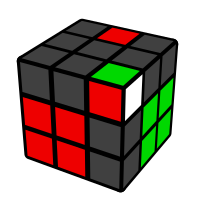
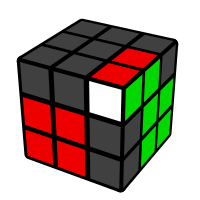
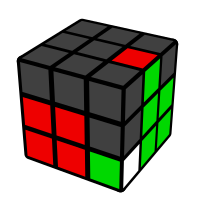
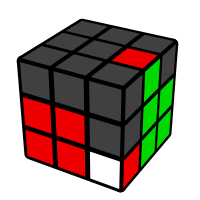
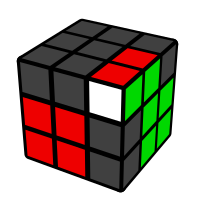
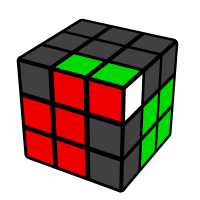
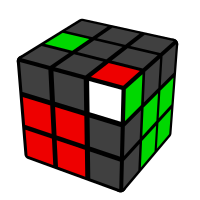
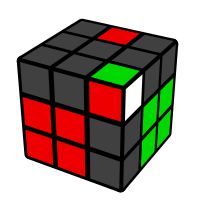
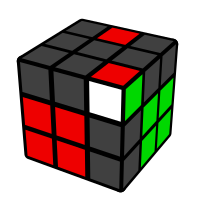
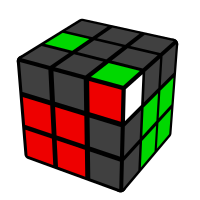
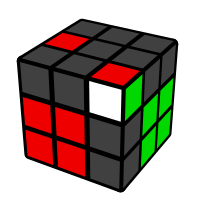
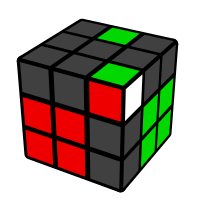
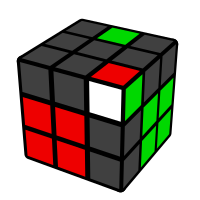
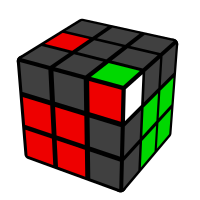
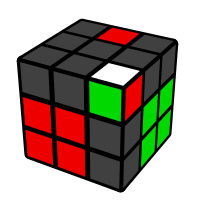
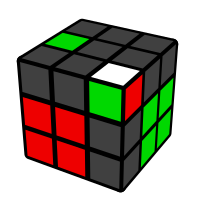
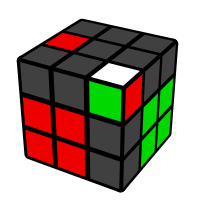
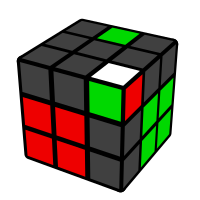
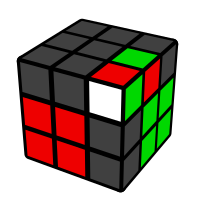
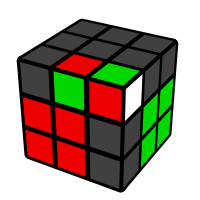
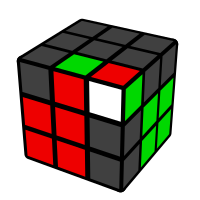
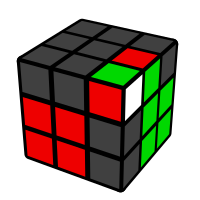
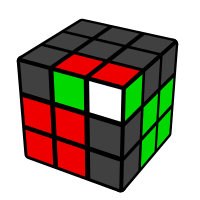
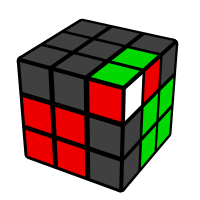
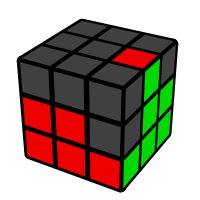
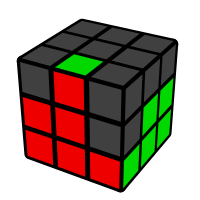
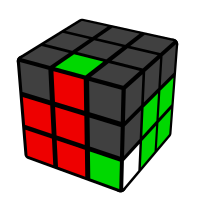
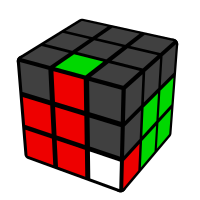
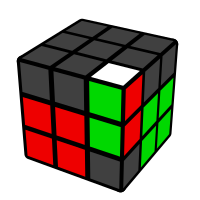
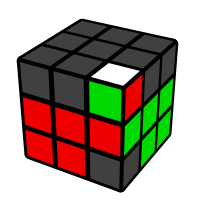
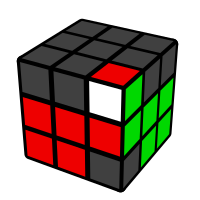
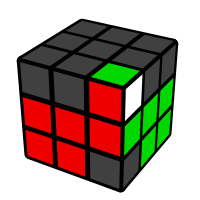
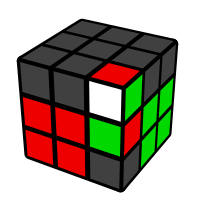
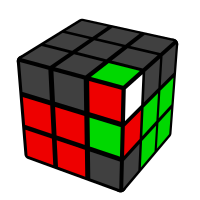
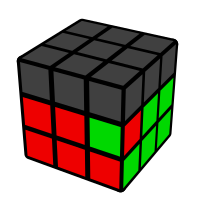
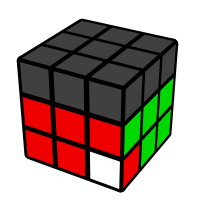
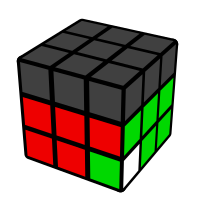
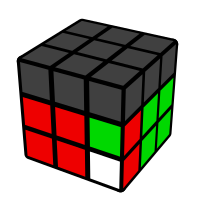
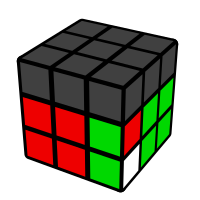
F2L (First Two Layers) is the step where you pair each corner with its matching edge and insert the pair into its slot — four pairs, right after the cross. Learn it intuitively first: once you see how pairs form, most cases solve themselves and you only need algorithms for the awkward ones. The 41 cases below each come with a fast, widely used algorithm, grouped by where the corner and edge are. Case numbers follow SpeedCubeDB; the teaching order follows J Perm's intuitive F2L.
F2L (First Two Layers) ist der Schritt, in dem man jede Ecke mit ihrer Kante paart und das Paar in seinen Slot einsetzt — vier Paare, direkt nach dem Kreuz. Lernt es zuerst intuitiv: Wer versteht, wie Paare entstehen, löst die meisten Fälle ohne auswendig gelernte Algorithmen; die 41 Fälle unten sind für die sperrigen Fälle, jeder mit einem schnellen, weit verbreiteten Algorithmus, gruppiert nach Position von Ecke und Kante. Die Fallnummern folgen SpeedCubeDB, die Lernreihenfolge folgt J Perms intuitivem F2L.
Algorithmes F2L
Le F2L (First Two Layers) consiste à associer chaque coin à son arête puis à insérer la paire dans son emplacement — quatre paires, juste après la croix. Apprenez-le d'abord intuitivement : quand on comprend comment les paires se forment, la plupart des cas se résolvent sans algorithme mémorisé ; les 41 cas ci-dessous sont pour les cas difficiles, chacun avec un algorithme rapide et répandu, groupés par position du coin et de l'arête. Les numéros suivent SpeedCubeDB, l'ordre pédagogique suit le F2L intuitif de J Perm.
Algoritmi F2L
L'F2L (First Two Layers) consiste nell'abbinare ogni angolo al suo spigolo e inserire la coppia nel suo slot — quattro coppie, subito dopo la croce. Imparatelo prima intuitivamente: quando si capisce come si formano le coppie, la maggior parte dei casi si risolve senza algoritmi memorizzati; i 41 casi sotto sono per i casi difficili, ognuno con un algoritmo veloce e diffuso, raggruppati per posizione di angolo e spigolo. I numeri dei casi seguono SpeedCubeDB, l'ordine didattico segue l'F2L intuitivo di J Perm.
F2L 공식
F2L(First Two Layers)은 각 코너와 그에 맞는 엣지를 페어로 만들고 슬롯에 삽입하는 단계로, 크로스 직후 네 개의 페어를 맞춥니다. 먼저 직관적으로 배우세요. 페어가 만들어지는 원리를 알면 대부분의 케이스는 공식을 외우지 않고도 풀립니다. 아래 41개 케이스는 까다로운 경우를 위한 것으로, 각각 빠르고 널리 쓰이는 공식을 달았고 코너와 엣지의 위치별로 그룹을 나눴습니다. 케이스 번호는 SpeedCubeDB를 따르고, 배우는 순서는 J Perm의 직관적 F2L을 따릅니다.
Intuitive F2L: Pair, Then Insert
Every F2L case comes down to two things: pair the corner with its edge, then insert the pair. There are only three situations. (1) The pair is already made — just insert it. (2) The pieces are separated in the top layer — bring them together, then insert. (3) The corner's white sticker faces up — turn it to the side first, then pair. The two inserts below are the endpoints of all three — learn them until they're automatic, and most of the 41 cases will make sense on their own.
R U R'
The basic insert. The pair is made and sits above its slot: R lifts it up, U lines it up, R' drops it in. The mirror image is F' U' F.
U R U' R'
The same insert with a U turn first. Use it when the pair sits one U turn away from its slot.
From Intuition to Algorithms
Most of the 41 algorithms are just a short setup followed by one of the two inserts above — the insert is the last part of each algorithm (shown in blue). Learn to spot the setup, and the algorithm stops being a sequence to memorize: it's the setup, then the insert you already know.
F2L 30
R U R' U'R U R'
F2L 27
R U' R'U R U' R'
All 41 Cases
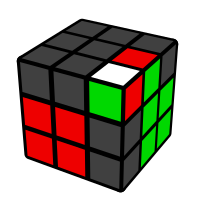
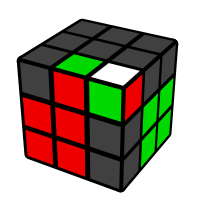
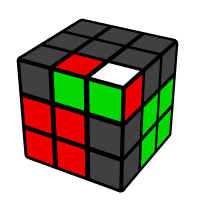
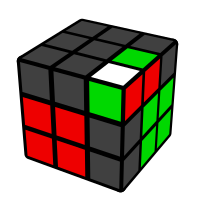
The complete F2L set, grouped by where the corner and edge are. Each diagram shows only the two pieces that matter — everything else is greyed out. All algorithms are for the front-right slot, with the cross on the bottom.